Ticker: MT
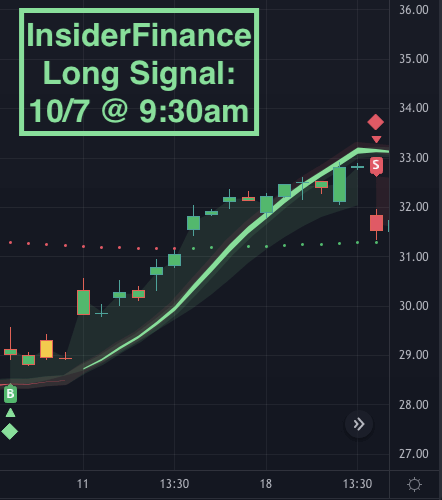
Use the MT case study as a structured replay exercise.
The purpose is not to memorize MT or treat the chart as a current idea. The purpose is to practice the InsiderFinance review sequence on a historical example where the markers are visible and the setup can be slowed down.
A case study is valuable because it removes the pressure of a live decision. You can walk through the chart one layer at a time and see how the workflow should guide your thinking.
Start with the attention trigger
First, identify what brought the chart to your attention.
In this example, the chart gives you several visible Algo cues at once:
- Buy Signal
- Reversal diamond
- Trend triangle
That is useful because MT is not just a “did the label work?” lesson. It is a practice rep for separating the first attention trigger from the later confirmation layers.
Do not stop at the marker. Use it as the starting point.
Ask:
- Which cue appeared first: the long signal, the swing diamond, the trend triangle, or the buy signal?
- Was the chart trying to continue a move, reverse from a level, or build from a new chart condition?
- Did the continuation cue and reversal-style cue support the same setup story, or did they need more confirmation?
- Did the marker cluster appear near a meaningful support/resistance area?
- Was the chart giving enough structure to keep reviewing?
That first step turns the screenshot into a workflow exercise instead of a picture of a past move.
Run the confirmation sequence
After the attention trigger, move through the same 4-point routine:
- Signal: What did the Algo show first?
- Confirm Line: Did price action support the direction, or did it need more evidence?
- Higher-timeframe context: Would the broader read support the setup, conflict with it, or require patience?
- Squeeze + Momentum: Was there lower-pane energy, pressure, or divergence that would strengthen or weaken the idea?
Then compare the chart to risk structure. Where was the nearest level that mattered? Where would the idea start to lose quality? Where would the chart have enough room to make the review worthwhile?
What this case study should teach
The MT example should train the habit of explaining a setup before you care about the outcome.
A good replay answer might sound like:
The setup earned attention because the signal and marker context lined up with chart structure, but the quality of the idea depended on confirmation, momentum support, and a clean risk level.
That is the skill the course is trying to build.
InsiderFinance is useful because it makes the review visible. The chart is not just showing a signal; it is giving you the pieces needed to explain why the setup was supported, mixed, or still early.
Your next step
Walk through the MT chart from left to right. Pause at the first major signal or marker, then write one sentence explaining whether the setup was supported, mixed, or not clean enough yet.