Algo Buy and Sell Signals
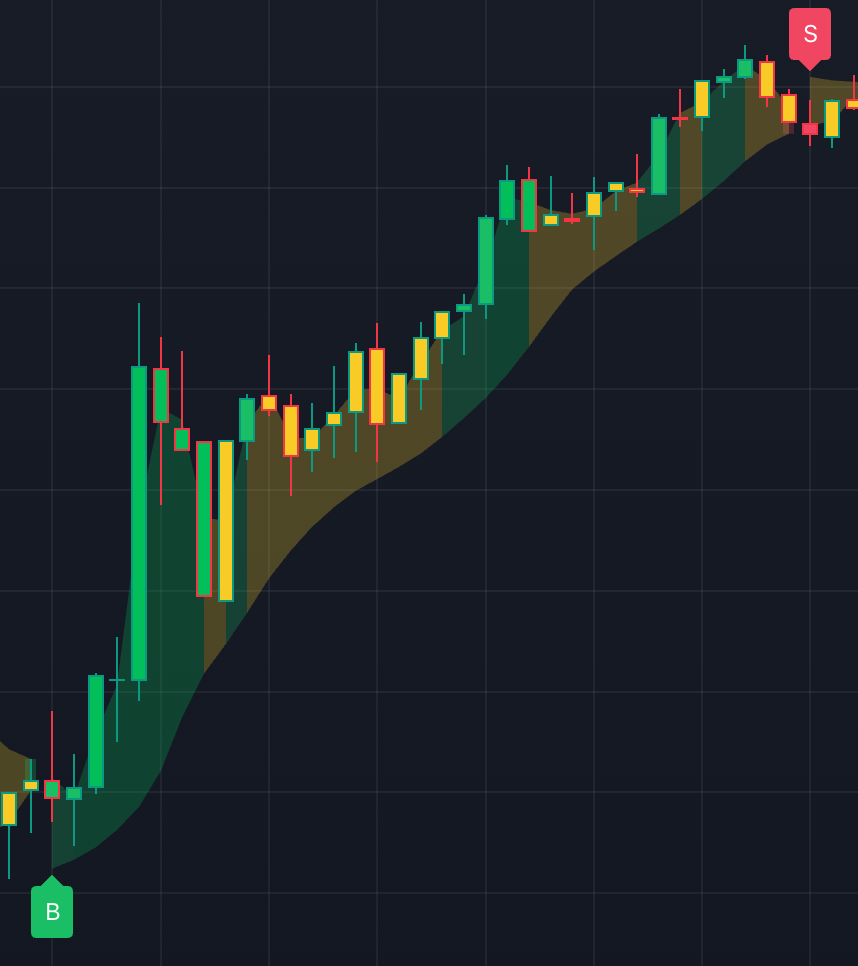
Buy and Sell labels are the fastest way to see when the Algo has detected a meaningful directional shift.
They are not decorative markers. They are the visible output of a broader consensus engine that weighs trend, smoothed price behavior, momentum, squeeze pressure, moving-average behavior, and trend-state changes into one clear chart cue.
That matters because most traders do this manually.
They stack indicators, flip between timeframes, compare momentum against trend, and then try to decide whether the chart is actually changing direction.
The InsiderFinance Algo compresses that first read into a green B or red S so you can stop asking, "Does anything matter here?" and start asking the better question: "Does the rest of the chart confirm this signal?"
What the Buy/Sell label tells you
- A green B means the Algo trend state has flipped bullish.
- A red S means the Algo trend state has flipped bearish.
Under the hood, the script is not checking one moving average or one candle.
It builds an aggregated trend score from a blend of multiple well known and proprietary indicators.
The signal prints when that aggregate trend state changes direction.
That is why the labels are useful: they summarize a complicated technical read into a simple starting point without forcing you to rebuild the entire indicator stack by hand.
Why sensitivity and source settings matter
The Algo includes sensitivity controls because not every trader reviews the chart the same way:
- Higher sensitivity reacts faster and can fit scalping or active intraday review.
- Lower sensitivity filters more noise and is better suited to swing or position-style review.
The script also lets you choose the source data used for calculations:
- Standard chart candles
- Heikin-Ashi
- Proprietary smoothing
That gives you control over the tradeoff between speed and filtering:
- Faster settings can surface turns earlier.
- Smoother settings can reduce noise and make the signal set more selective.
How to use the signal correctly
Treat the label as the beginning of the review, not the whole decision. When a Buy or Sell label appears, run the same sequence every time:
- Check whether price and the Confirm Line support the same direction.
- Look for a diamond, triangle, or Sniper Cross that adds stronger confirmation.
- Review the Higher Timeframe Panel so the active chart is not fighting the bigger trend.
- Inspect Squeeze + Momentum for pressure, release, crossover behavior, divergence, volume participation, and consensus.
- Compare the setup against support, resistance, Bollinger Bands, and the visible stop-loss/take-profit structure.
The strength of the signal is not that it tells you to act blindly.
The strength is that it gives you a consistent entry point into the full InsiderFinance review system.
Why InsiderFinance makes this faster
Without the Algo, a trader has to maintain the whole stack manually: trend tools, moving averages, momentum, squeeze, confirmation, levels, and alerts.
InsiderFinance puts the signal, confirmation line, higher-timeframe read, risk levels, and lower-pane context into one TradingView workflow.
That turns Buy/Sell labels into a practical review advantage.
You get the directional cue first, then use the rest of the system to decide whether the setup has enough agreement to deserve more attention.
Your next step
Open one recent Buy or Sell label and explain it in plain English: what flipped, what confirms it, what conflicts with it, and where the risk structure sits.
If you cannot explain those pieces, keep reviewing before you treat the signal as actionable.