Nvidia RTX Spark Enters PC Chip Market
Nvidia RTX Spark expands Nvidia into PC processors with Microsoft and OEMs, forcing traders to reassess NVDA's addressable market and rivals.
KEY TAKEAWAYS
- Nvidia unveiled RTX Spark with N1X, an Arm-based integrated CPU+GPU bringing CUDA and RTX to Windows PCs.
- Microsoft partnership signals OEM support from Dell, HP, ASUS, Lenovo and MSI.
- Move extends Nvidia's data-center software stack into client PCs and pressures Intel, AMD, Qualcomm.
HIGH POTENTIAL TRADES SENT DIRECTLY TO YOUR INBOX
Add your email to receive our free daily newsletter. No spam, unsubscribe anytime.
Nvidia (NVDA) unveiled Nvidia RTX Spark on June 1, 2026, introducing an Arm-based integrated CPU-plus-GPU design called N1X and a partnership with Microsoft to bring Windows-native AI agents to laptops and desktops, expanding Nvidia’s chip ambitions beyond data centers.
RTX Spark Product and Software
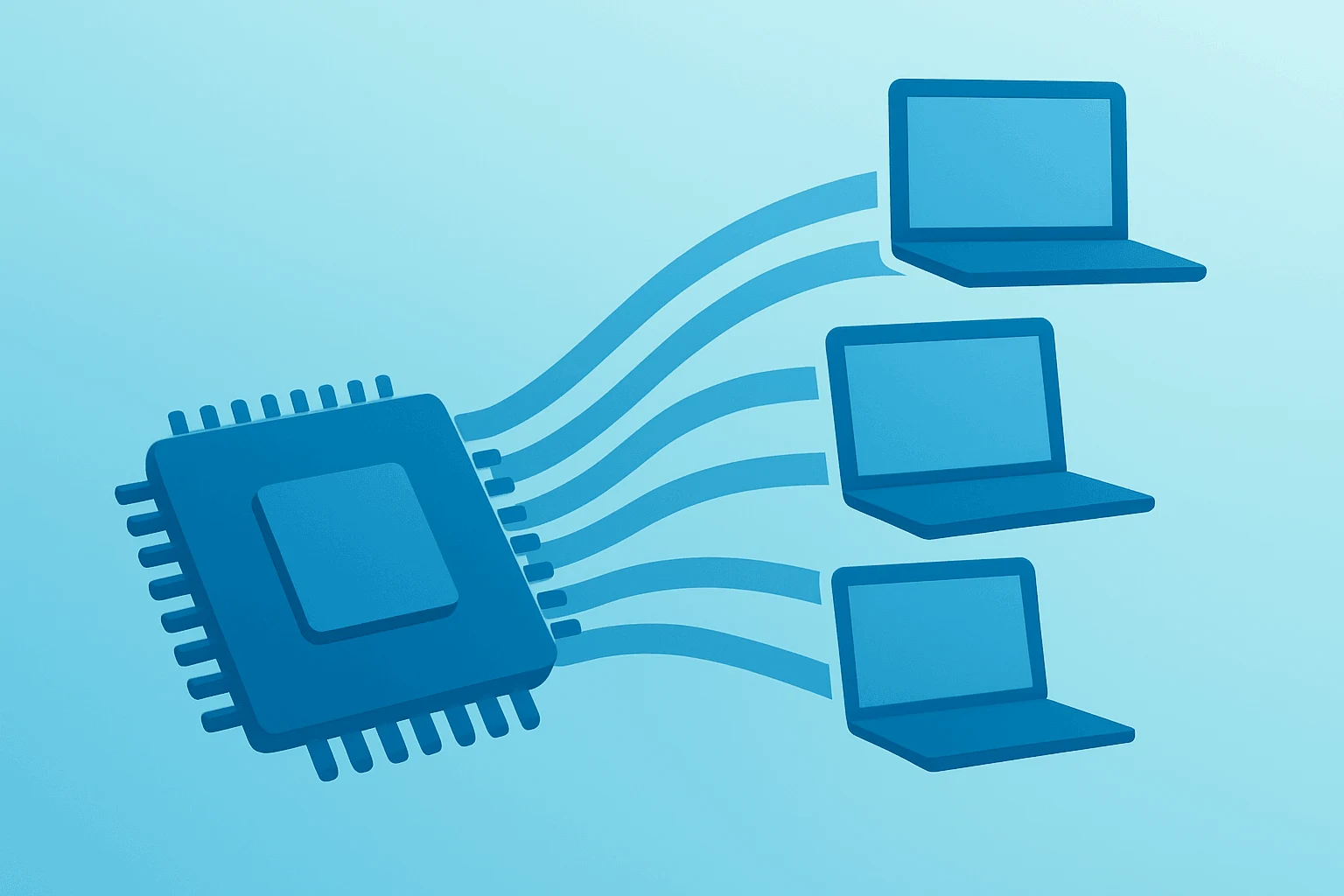
Nvidia and Microsoft described RTX Spark as a hardware platform built to accelerate on-device artificial intelligence. The companies called it a “1-petaflop superchip” that integrates an Arm-based N1X processor with an RTX GPU, bringing the full CUDA and RTX ecosystem to Windows PCs. This enables GPU-accelerated inference for local large-language, vision, and multimodal models with low latency and less reliance on cloud connections.
The chip is designed to support continuous, privacy-preserving AI agents by keeping sensitive processing on the device. Nvidia positioned RTX Spark as a full PC platform for both traditional and AI-centric workloads, supporting hardware ray tracing, tensor-core acceleration, and other RTX features so gaming, creative, and simulation software can run alongside local AI services. Developers can use familiar tools such as CUDA, TensorRT, and RTX-accelerated frameworks to port and optimize applications across cloud and client devices.
OEM Debut and Market Stakes
RTX Spark processors based on the N1X chip will debut in laptops from Microsoft, Dell, HP, ASUS, Lenovo, and MSI. Nvidia demonstrated laptops and desktops running entirely on its integrated CPU-plus-GPU chip, signaling a shift from being solely a discrete GPU vendor to a PC platform silicon provider. The initial focus is on Windows laptops and desktops aimed at AI-heavy productivity, creative workflows, and high-end graphics.
Nvidia framed the launch as an effort to extend its data center AI technologies—using the same CUDA and inference toolchain—into lower-power PC form factors. The company said this will create a unified programming model from cloud servers to client devices, easing development of accelerated AI applications.
Analysts view the move as a direct challenge to incumbent PC processor makers Intel, AMD, and Qualcomm, testing how far Arm-based chips can displace x86 designs in Windows machines. The announcement also highlights Nvidia’s reliance on Arm CPU architecture for its client-side design, which could generate licensing and royalty revenue for Arm Holdings as PC vendors adopt the platform.
The companies’ statements focused on product introductions and partnerships without announcing mergers, joint ventures, or regulatory approvals. Nvidia’s entry into platform silicon for Windows PCs, backed by Microsoft and major OEMs and layered on its established software ecosystem, marks a strategic expansion of its addressable market and raises competitive stakes for traditional PC chipmakers as vendors race to define the next generation of AI-native personal computers.
“NVIDIA today unveiled NVIDIA RTX Spark™, a new superchip that reinvents Windows PCs for the era of personal AI agents — offering a new class of computer…” the companies said in their joint press release.