Micron Stock Surges on HBM Shortage and Analyst Upgrades
Micron stock rose after record fiscal Q3 and sold-out HBM capacity as Musk comments and analyst upgrades repriced targets and boosted bullish positioning.
KEY TAKEAWAYS
- Micron stock surged after a record fiscal Q3 with revenue near $41.5 billion and strong margins.
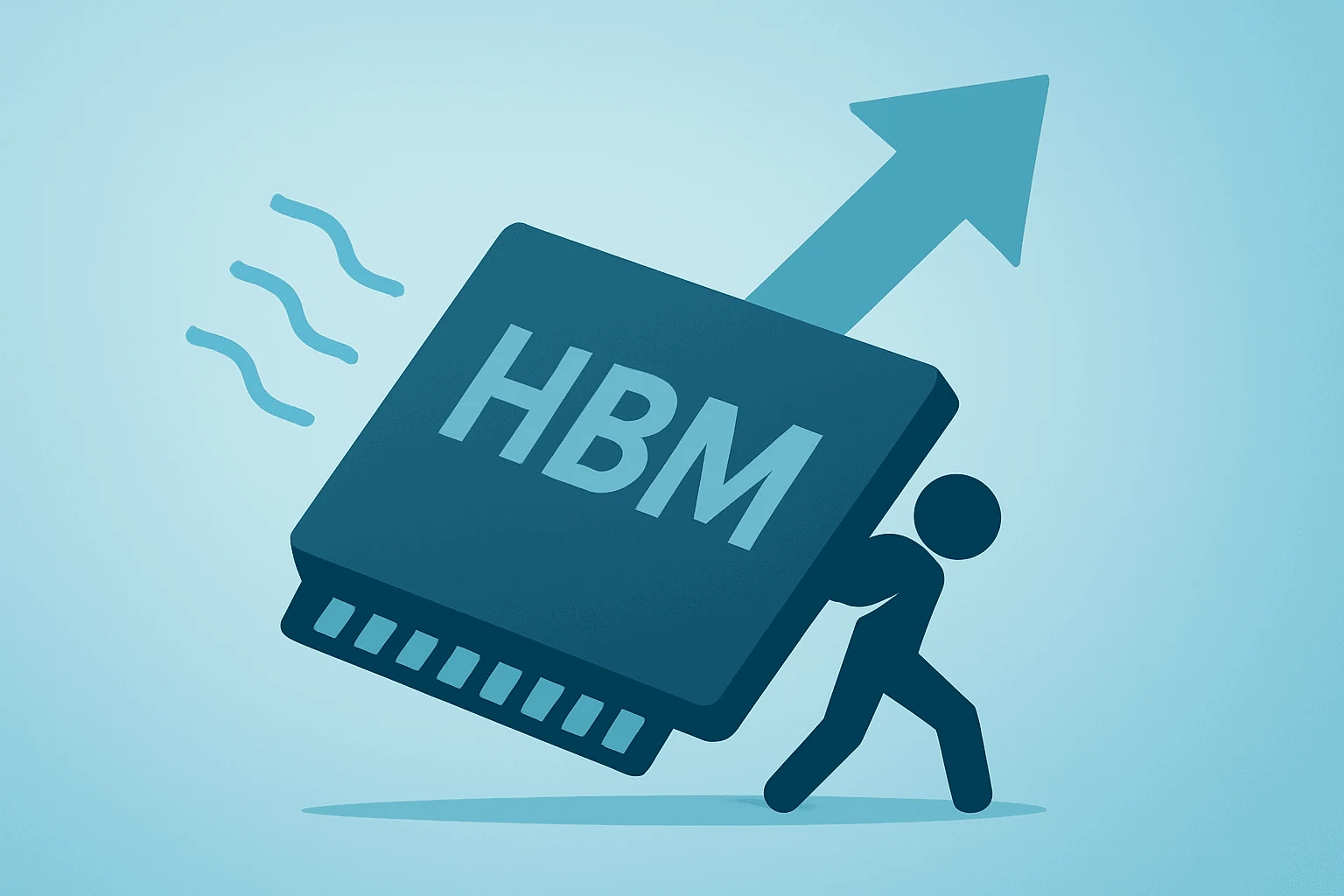
- CEO said Micron meets only 50.0-65.0% of key customers' HBM demand and 2026 HBM4 capacity is sold out.
- Brokers repriced Micron, leaving consensus Buy and average price targets near $1,268-$1,548.
HIGH POTENTIAL TRADES SENT DIRECTLY TO YOUR INBOX
Add your email to receive our free daily newsletter. No spam, unsubscribe anytime.
Micron stock (MU) rose sharply after record fiscal-quarter results and a wave of analyst upgrades, driven by CEO Sanjay Mehrotra’s warnings of constrained high-bandwidth memory (HBM) capacity and Elon Musk’s remarks that memory demand is outpacing production, reinforcing expectations of sustained price strength.
Record Quarter and Strategic Agreements
Micron Technology, Inc., a leading producer of DRAM, NAND, and HBM for data centers, PCs, mobile, and automotive markets, reported a record fiscal third quarter with revenue near $41.5 billion, a gross margin of about 84.6%, and earnings per share around $25.11. The company guided for roughly $50 billion in revenue for the next quarter, with commentary describing the high-end HBM market as sold out through 2028.
The quarter coincided with 16 strategic agreements totaling about $22 billion in customer commitments, featuring take-or-pay clauses that enhance demand visibility and pricing leverage. Micron also secured a 10-year wafer supply deal backed by roughly $3 billion in commitments, including about $500 million directed to GlobalWafers, aimed at securing front-end capacity. Moody’s upgraded Micron’s senior unsecured debt, citing stronger cash generation and contractual customer commitments.
HBM Capacity Constraints and Market Repricing
CEO Sanjay Mehrotra said Micron is fulfilling only 50–65% of key customers’ medium-term HBM demand and that the company’s entire 2026 HBM4 capacity is sold out, signaling tight supply in high-end memory. He also noted that AI workloads are driving data-center DRAM and NAND demand to exceed half of the industry’s total addressable market in calendar 2026.
Elon Musk reinforced this narrative during SpaceX’s earnings call, stating memory chip demand is rising far faster than global production and suggesting prices could remain elevated for years. Secondary reports cited demand growth near 200% annually and SpaceX’s quarterly capital expenditures of $18.4 billion tied to AI infrastructure, supporting a bullish memory price outlook.
Following the quarter, brokers materially repriced Micron, with price targets clustering between $1,250 and $1,750. Notable targets include Bank of America at $1,550, UBS at $1,625, Susquehanna at $1,750, Cantor Fitzgerald at $2,000, and ThinkEquity at $900. Aggregators show a consensus Buy rating with average targets near $1,268 to $1,548. UBS projects more than $400 billion in free cash flow through 2028 under its modeling assumptions. Analysts caution that prices and margins could normalize as new capacity comes online from mid-2027 through 2028.
Industry Position and Risks
Micron held about 25% of the global DRAM market in the second quarter of 2026, nearly matching a top peer. Analysts highlight Micron as one of a few suppliers positioned to provide HBM to hyperscalers amid accelerating cloud and AI infrastructure spending.
This repositioning has prompted bullish revaluations but also renewed focus on semiconductor-cycle risks. Micron trades at roughly five times forward earnings, and analysts warn that aggressive capacity additions planned for mid-2027 through 2028 could trigger oversupply. Durability of AI spending and competition linked to China remain material concerns. Legal and governance issues, including a class-action-related inquiry and CEO Sanjay Mehrotra’s insider sale of about $37.3 million in stock, add sentiment overhangs. Firms emphasize that current prices and margins may normalize over time.
Outlook
Near-term developments will depend on hyperscaler AI capital expenditures and the pace of new capacity coming online. Buybacks are expected to resume once contractual restrictions lift in December 2026. Brokers’ upside cases rely on continued tightness in high-end memory and sustained hyperscaler spending that could keep earnings above normalized levels through fiscal 2027.