Tesla Cybercab Production Begins at Gigafactory Texas
Tesla Cybercab production shifts robotaxi revenue timing and positioning as company cites $0.20 per mile economics and sub-$30,000 price targets.
KEY TAKEAWAYS
- Tesla started Cybercab production at Gigafactory Texas, initiating a slow S-curve manufacturing ramp.
- Line prepared to scale toward hundreds per week; company targets 2 million annual Cybercab capacity.
- Management projects unsupervised FSD in customer vehicles probably Q4 2026, shifting robotaxi revenue later and raising execution risk.
HIGH POTENTIAL TRADES SENT DIRECTLY TO YOUR INBOX
Add your email to receive our free daily newsletter. No spam, unsubscribe anytime.
Tesla Inc. (TSLA) confirmed on its Q1 2026 earnings call on April 23 that Cybercab production has started at Gigafactory Texas, initiating a slow S-curve ramp that management expects will accelerate toward scaled robotaxi deployment by year-end.
Production Start and Ramp
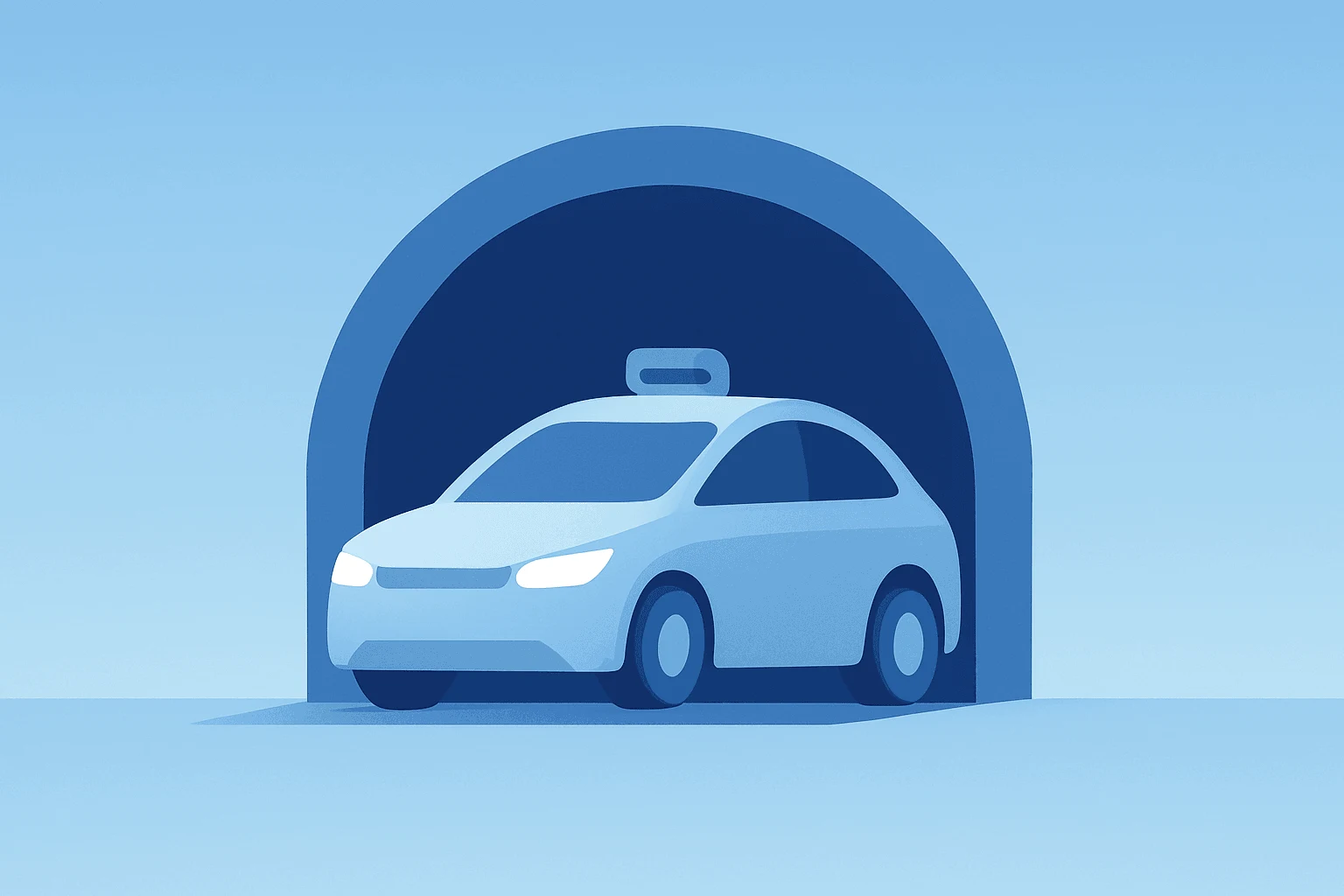
The first Cybercab, VIN #001, rolled off the Gigafactory Texas line on February 17, 2026. Tesla shifted to continuous production in April, with about 60 Cybercabs spotted on the factory campus earlier that month. The company posted a video showing a vehicle driving out of an assembly tunnel into a holding lot, describing the line as ready to scale toward hundreds of units per week.
Management outlined an S-curve manufacturing ramp, starting slowly and accelerating exponentially toward the end of 2026. At full capacity across multiple factories, Tesla aims for annual Cybercab production of 2 million units. The company expects the vehicle to become its highest-volume model over time, as roughly 90.0% of miles driven involve one- or two-person trips.
Compliance and Deployment Timeline
The Cybercab robotaxi is a two-seat autonomous vehicle built without a steering wheel or pedals, designed to operate on Tesla’s vision-based Full Self-Driving (FSD) system. Tesla says the vehicle meets applicable Federal Motor Vehicle Safety Standards (FMVSS) through self-certification and carries federal compliance markings. Vice President Lars Moravy stated the company believes the National Highway Traffic Safety Administration’s (NHTSA) 2,500-unit cap for driverless testing or deployment does not apply, so no waiver is required. Congress is debating the SELF DRIVE Act, which would raise that cap to 90,000 units.
Management projects unsupervised FSD in customer vehicles “probably Q4 2026,” with initial service rolling out in geofenced pilot areas. Preliminary economics estimate an operating cost near $0.20 per mile and a target purchase price under $30,000. The stretched manufacturing ramp and timing assumptions increase execution risk for near-term robotaxi revenue, shifting the program’s commercial payoff toward later-stage results and tightening the stakes on Tesla’s ability to scale production and deploy on schedule.